Indian Polity
Articles, notes, and PYQs on Indian Polity and Constitution for UPSC, State PCS, SSC and all competitive exams from Mantra IAS Institute
Index
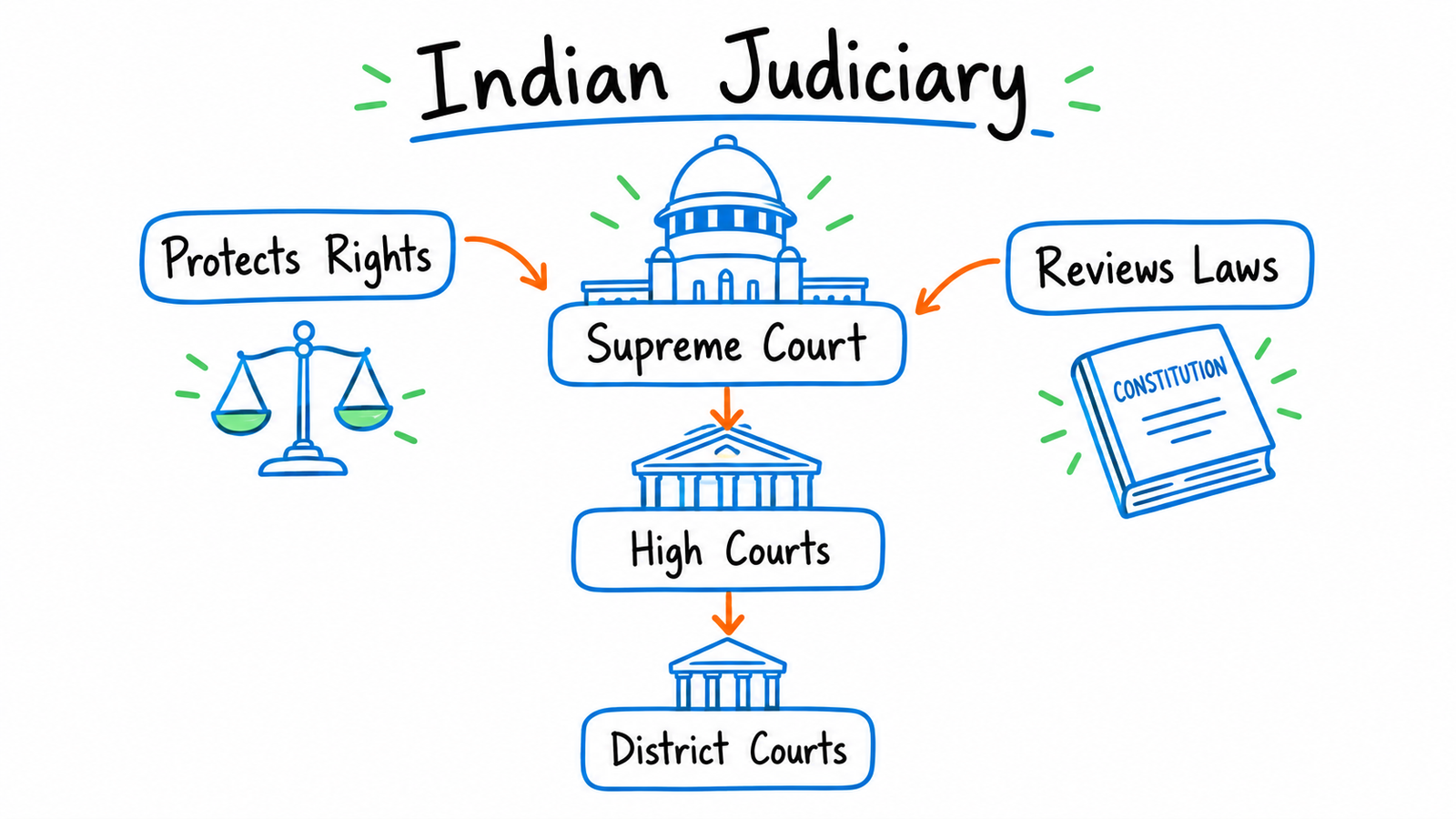
Indian Judiciary
Indian Judiciary explained: structure, Supreme Court, High Courts, judicial review, writs, appointments and key Articles for UPSC and State PSC exams.
Type-3 = 2026 UPSC CSE PT GS-1 Official Question Paper
Classic editor by Mantra IAS Institute Tejas Rajgor DO NOT OPEN THIS TEST BOOKLET UNTIL YOU ARE TOLD TO DO SO T.B.C..: TDMN-A-ASO Test Booklet Series Serial No. …………….. TEST BOOKLET GENERAL STUDIES PAPER – I Time Allowed: Two Hours पूर्णांक:200 INSTRUCTIONS IMMEDIATELY AFTER THE COMMENCEMENT OF THE EXAMINATION, YOU SHOULD CHECK THAT THIS TEST
English Question paper 2026 UPSC CSE GS-1
Gutenberg Editor By Mantra IAS Institute By Tejas Rajgor DO NOT OPEN THIS TEST BOOKLET UNTIL YOU ARE TOLD TO DO SO T.B.C..: TDMN-A-ASO Test Booklet Series Serial No. …………….. TEST BOOKLET GENERAL STUDIES PAPER – I Time Allowed: Two Hours पूर्णांक:200 INSTRUCTIONS 1. IMMEDIATELY AFTER THE COMMENCEMENT OF THE EXAMINATION, YOU SHOULD CHECK THAT
Parliament of India: Structure, Powers, and Legislative Process
The Parliament of India is the supreme legislative body of the Republic, comprising the President, the Rajya Sabha, and the Lok Sabha. Rooted in Articles 79 to 111 of the Constitution and shaped by colonial-era reforms, it functions as a bicameral institution responsible for enacting laws, representing citizens, and overseeing government through defined legislative procedures and privileges.
UPSC and State PSC Indian Polity Constitution Previous Year Questions with Answers and Explanations
A curated set of 10 Previous Year Questions from Indian Polity covering the Constitution, sourced from UPSC CSE, GPSC, PPSC, MPPSC, UPPSC, RPSC, BPSC, MPSC, and HPSC Prelims exams. Topics include the Preamble, Parliament, Fundamental Rights, Directive Principles, Judiciary, Finance Commission, Panchayati Raj, and more, with detailed answer explanations.
Preamble
Complete notes on Preamble of the Indian Constitution — meaning of each word, 42nd Amendment, key points & PYQs for UPSC, SSC CGL, and State PCS exams.
Emergency Provisions in India: Articles 352–360 Explained for UPSC & State PCS
Learn Emergency Provisions in India — National, State & Financial Emergency (Articles 352–360) with key points & PYQs for UPSC, SSC & State PCS exams.
Parliament of India
Complete notes on Parliament of India — Lok Sabha, Rajya Sabha, composition, powers, sessions & PYQs for UPSC, SSC CGL and State PCS competitive exams.

Centre-State Relations in India: Legislative, Administrative & Financial — UPSC Notes
Complete notes on Centre-State Relations in India — legislative, administrative & financial aspects, Articles, Sarkaria Commission & PYQs for UPSC & State PCS.